Your Cart is Empty
Our Testing Methods
Youngstown Glove Company goes through an exhaustive development process for every glove we bring to market. We perform numerous field tests and laboratory tests to ensure we are producing gloves that not only meet safety specifications — but that are also comfortable, durable, and dexterous. There is a real balancing act in pattern making and material selection to meet the multifaceted needs of our customers.
Every glove that carries a safety rating or performance claim has been tested by an accredited third-party laboratory. We are happy to provide copies of our lab test results for customers who require them on file.
Jump to a Test Method:
→ Flame Resistance Test — ASTM D6413 & ASTM F1358
→ Cut Resistance Test — ASTM F2992 / ANSI/ISEA 105
→ Puncture Resistance Test — ANSI 105:2016 & EN 388:2016
Arc Flash Test — ASTM F2675
Arc flash testing measures the heat transfer response through a glove when exposed to the thermal energy of an electric arc. This test determines whether a glove provides meaningful protection in the event of an arc flash incident — and assigns it a quantified arc rating in calories per square centimeter (cal/cm²).

Why It Matters
Arc flash is one of the most serious hazards in electrical work. OSHA mandates that any worker with potential exposure to electric arc energy of 2 cal/cm² or greater must have arc-rated PPE available. An arc rating gives Safety Managers a precise, comparable number for PPE selection and hazard analysis.
The Test Standard
Youngstown's arc-rated gloves are tested to the ASTM F2675 standard — the standard test method for determining arc ratings of hand protective products for electrical arc flash protection. Products are tested to the version of the standard current at the time of testing. New and updated products are tested to ASTM F2675-23, the current revision.
Note: Specialized laboratories are required for arc flash testing due to the extreme nature of arc flash events. All Youngstown arc-rated products are tested by accredited third-party laboratories.
How the Test Works
- A glove is mounted on a holder equipped with a calibrated sensor that records heat transmission data.
- 15 pairs of base model gloves are required and tested at various incident energy levels.
- Additional pairs of ‘as sold’ gloves are required to determine the ignition withstand level.
- The incident energy transmitted through the glove is measured and compared to the Stoll curve — the threshold for a survivable second-degree burn.
- The resulting arc rating (ATPV or EBT) represents the energy level at which there is a 50% probability of onset of a second-degree burn.
Compliance Reference
Arc-rated gloves are required under NFPA 70E-2024 and OSHA 29 CFR 1910.269 for workers exposed to arc flash hazards. Your employer’s arc flash hazard analysis determines the required arc rating for each task.
Important: Youngstown’s arc-rated gloves do NOT provide protection against shock or voltage. Rubber insulating gloves with leather protectors are required for shock protection.
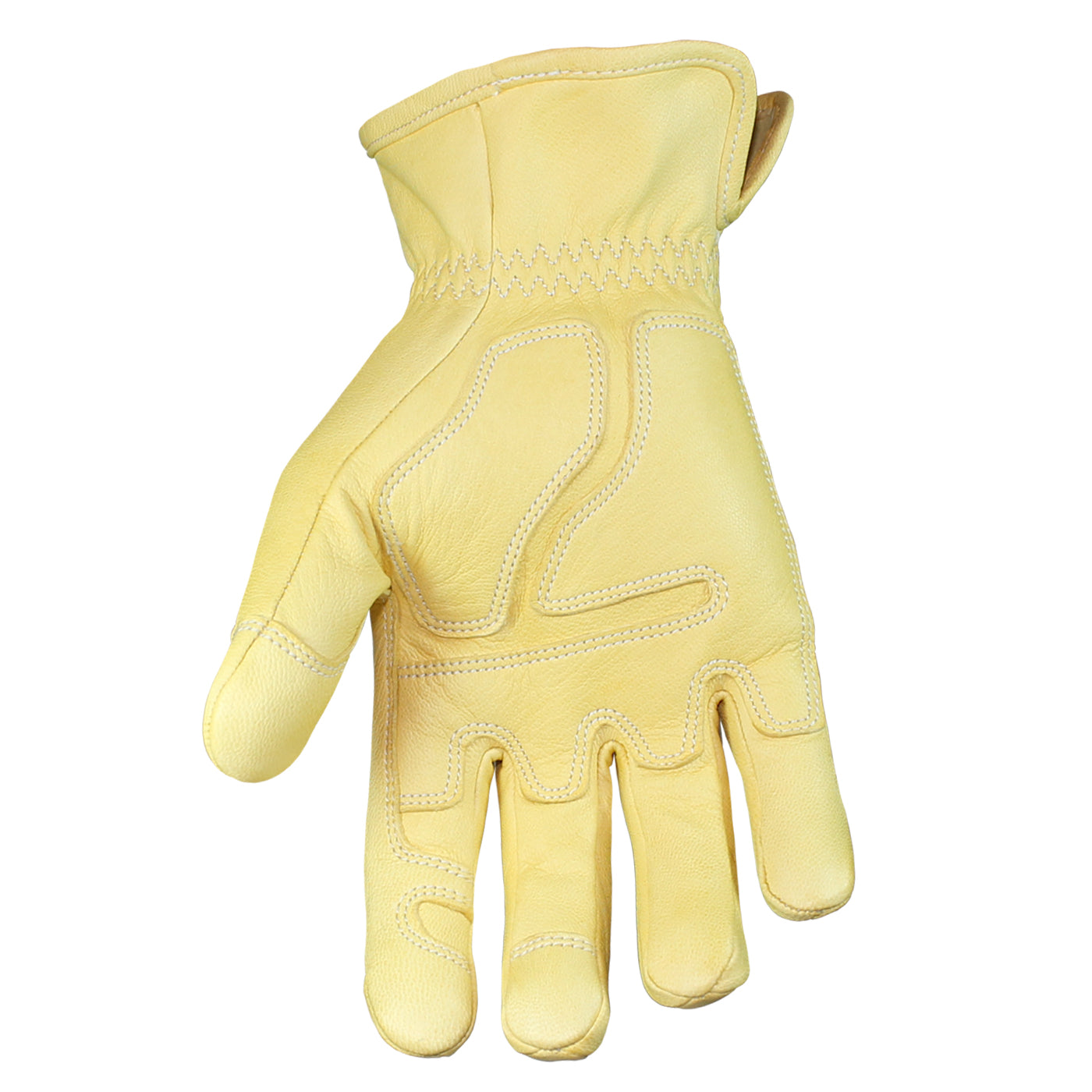
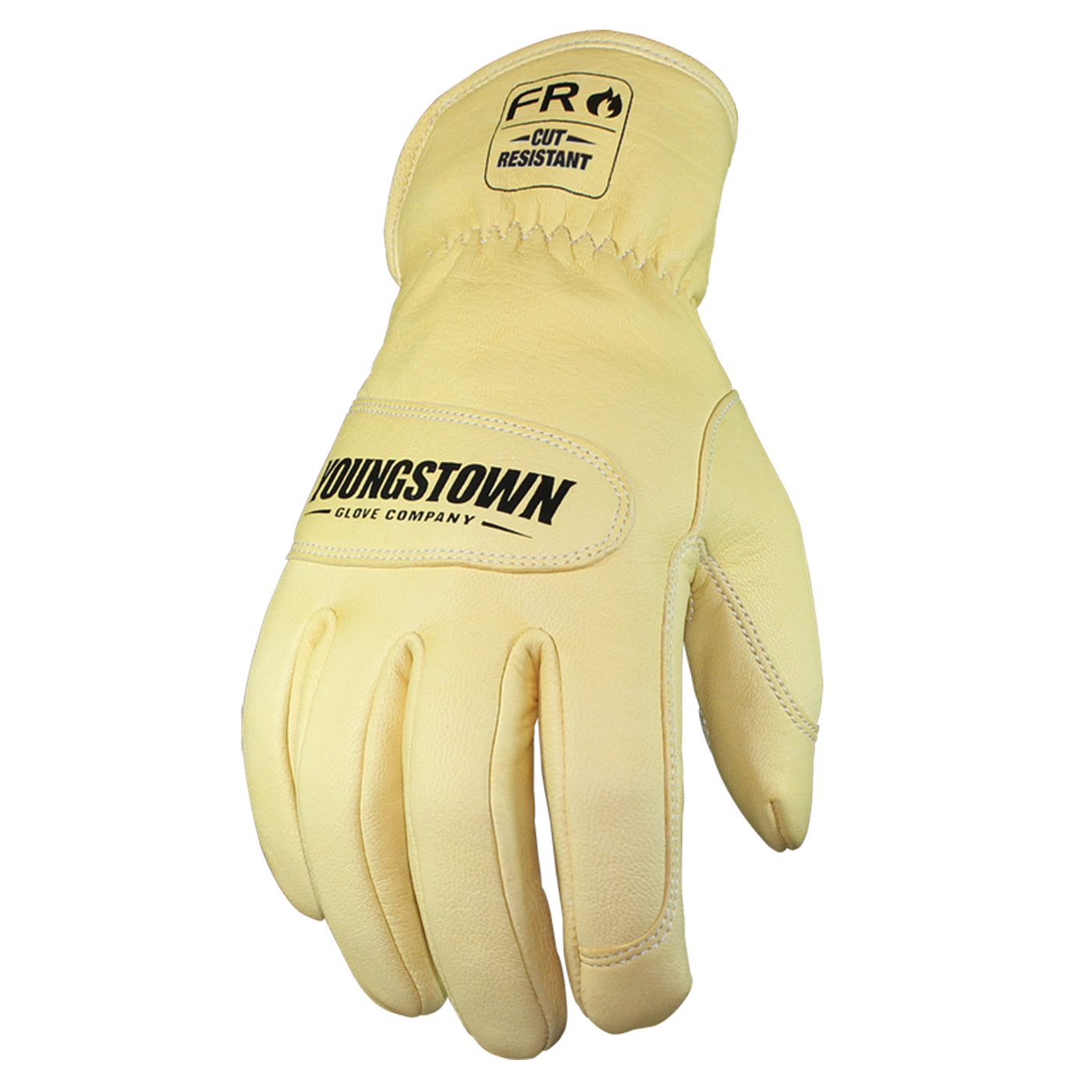
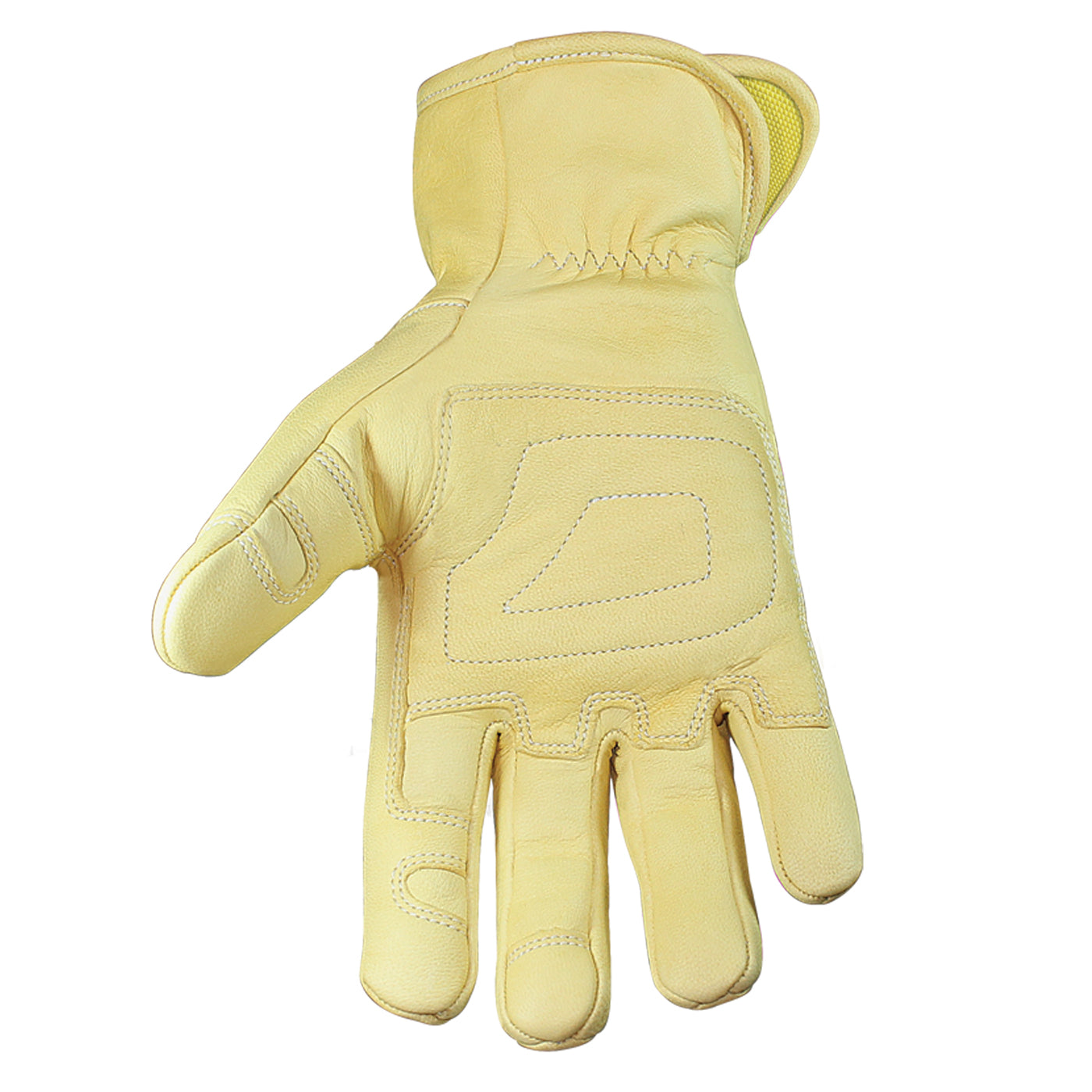
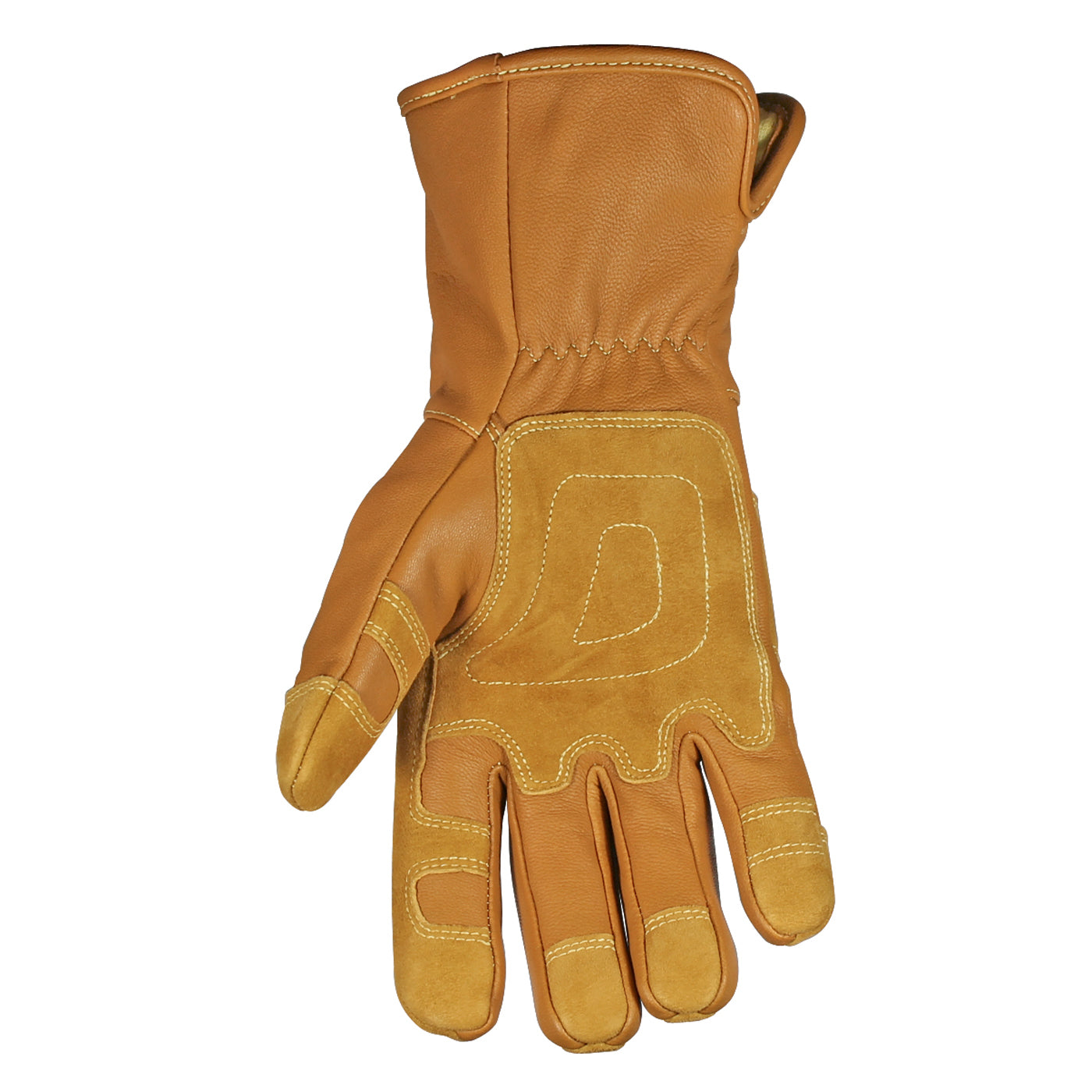
Flame Resistance Tests — ASTM D6413 & ASTM F1358
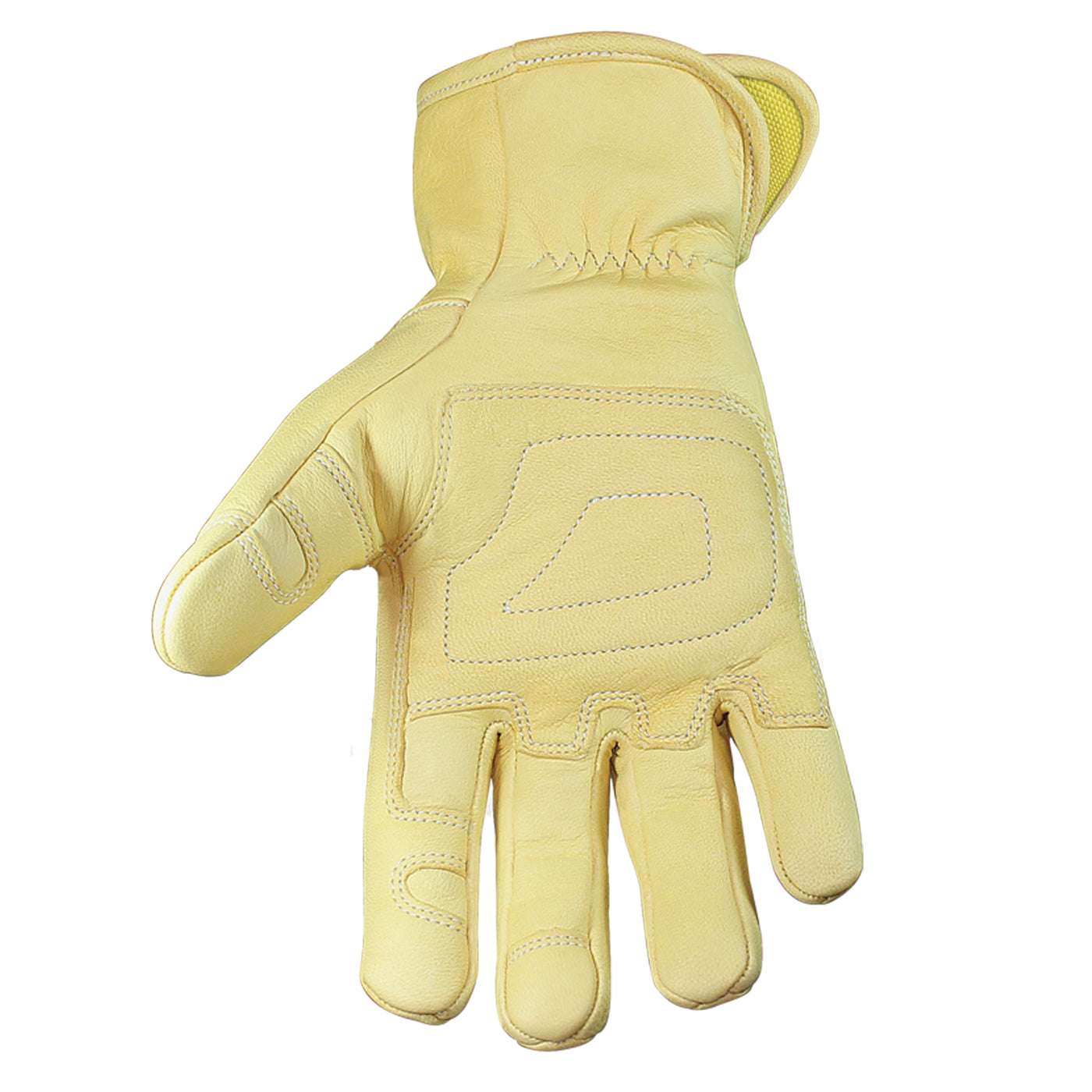
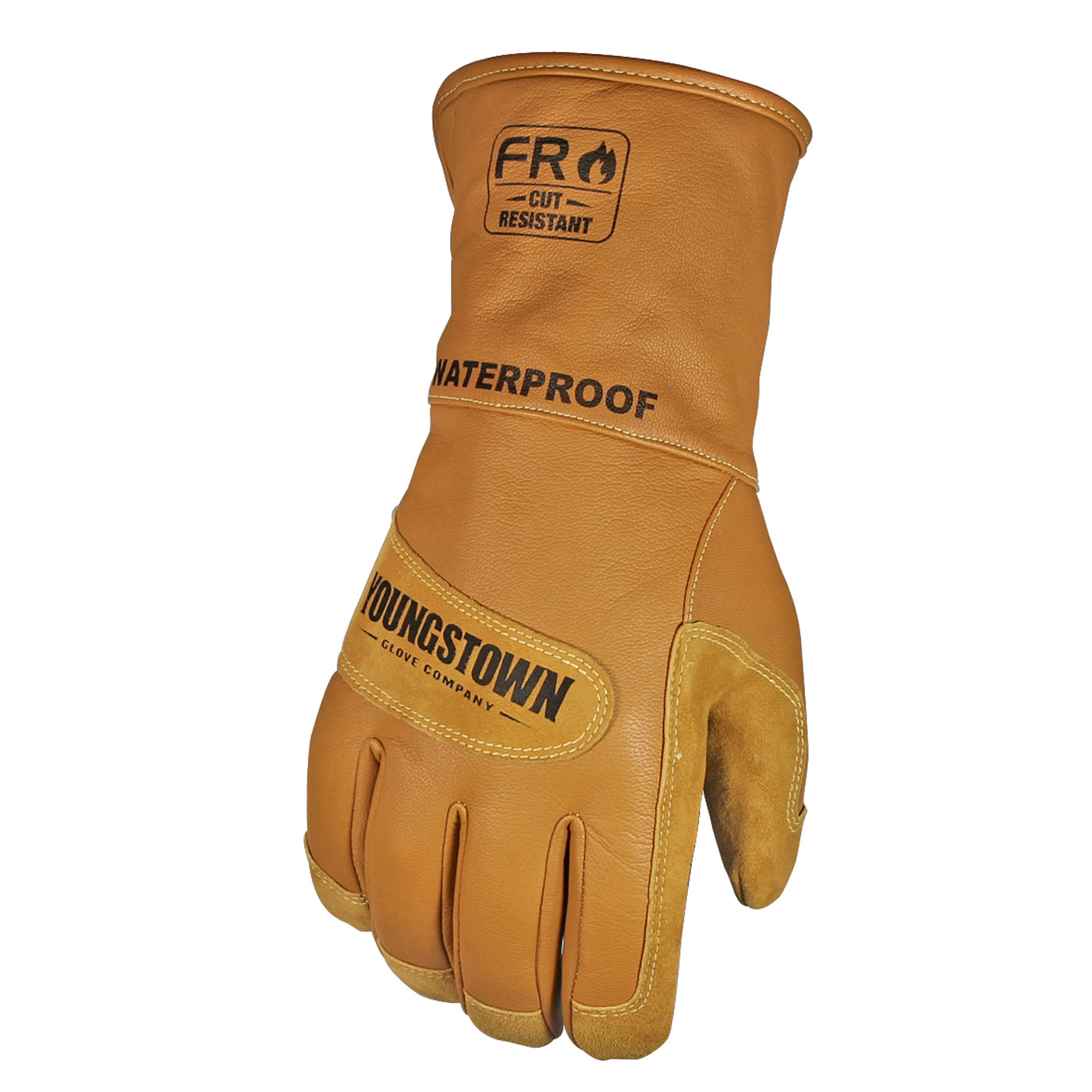
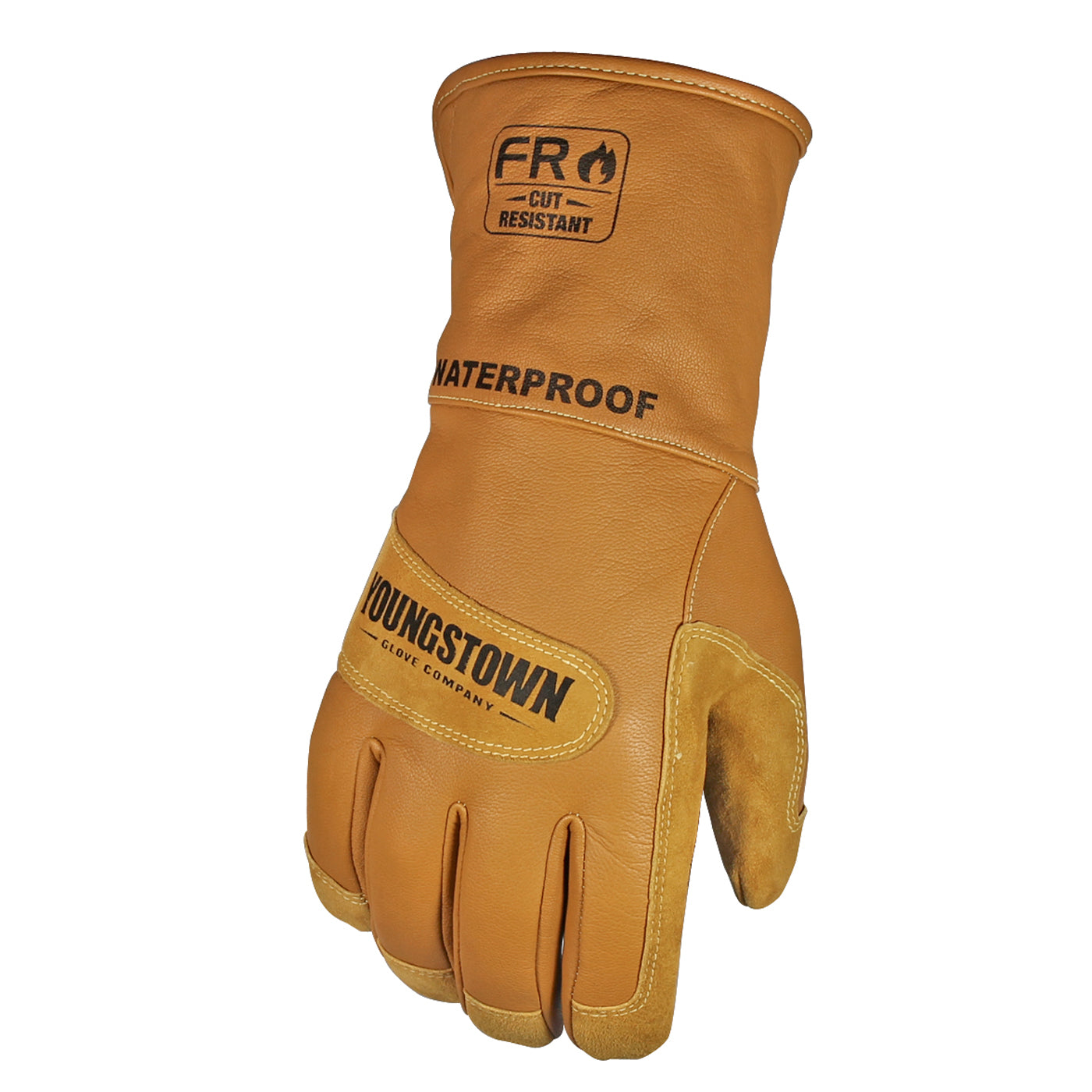
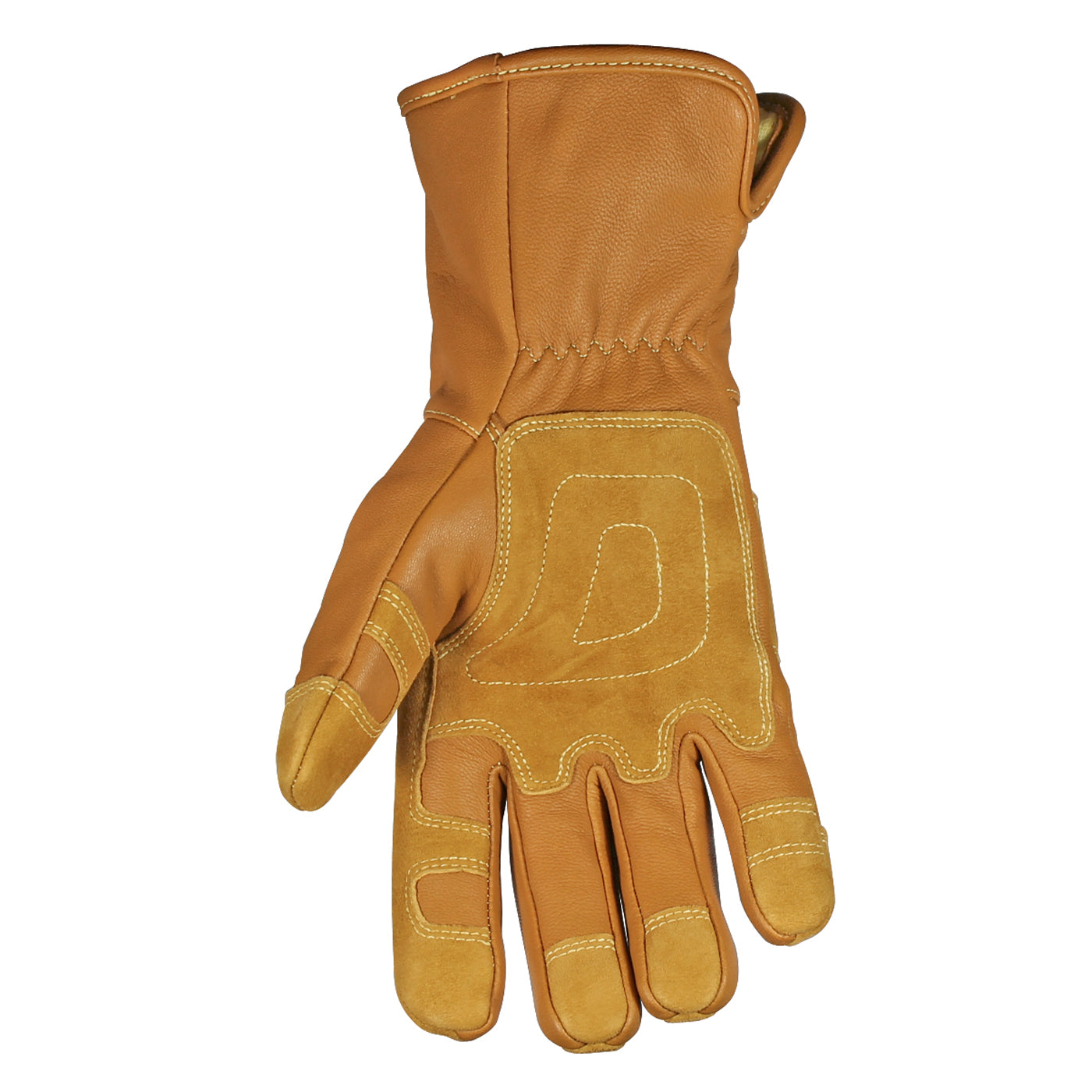
Flame resistance testing confirms that a glove material will not ignite, drip, or melt when exposed to flames or sparks — and will self-extinguish when the ignition source is removed. Youngstown uses two ASTM flame resistance standards, applied based on the construction of each specific glove.

ASTM D6413 — Vertical Flame Test (Single-Layer Fabrics)
ASTM D6413 is the Standard Test Method for Flame Resistance of Textiles and is the defining test for compliance with OSHA 1910.269. This standard applies to single-layer fabric constructions. This test determines whether a fabric will continue to burn after the ignition source is removed, and whether dripping or melting occurs.
How the test works:
- A 3-inch by 12-inch swatch of single-layer material is enclosed and secured in a test chamber.
- The bottom of the fabric is exposed to a controlled flame for 12 seconds, then the flame is extinguished.
- The fabric is evaluated for: after-flame time, char length, after-glow time, and whether dripping or melting occurred.
A passing result confirms the material meets the requirements of OSHA 1910.269 for FR clothing and gloves.
ASTM F1358 — Flame Impingement Test (Multi-Layer Fabrics)
ASTM F1358 is a flame test designed for multi-layer fabric constructions — the construction used in the majority of Youngstown’s FR gloves. This test determines whether multi-layer fabric constructions will continue to burn after the ignition source is removed, and whether dripping or melting occurs.
How the test works:
- A 3-inch by 16-inch swatch of multi-layer material is enclosed and secured in a test chamber.
- Multi-layer material specimens are exposed to a direct ignition source under controlled conditions.
- The fabrics are exposed to a controlled flame for 12 seconds, then the flame is extinguished.
- The fabrics are evaluated for: after-flame time, char length, after-glow time, and whether dripping or melting occurred.
A passing result confirms the material meets the requirements of OSHA 1910.269 for FR clothing and gloves.
Which Standard Applies to Your Glove?
The applicable test standard is determined by the construction of each specific glove — not by brand or product line. Single-layer gloves are tested to ASTM D6413; multi-layer gloves are tested to ASTM F1358. Because most Youngstown FR gloves utilize a multi-layer construction, the majority of our FR line is tested to ASTM F1358.
Each product’s individual test certification is available upon request. Contact us at info@ytgloves.com for lab test documentation.
Note: Youngstown FR gloves are not designed for firefighting applications. Our FR gloves are designed to meet the flame resistance requirements of OSHA 1910.269 for electrical utility and industrial work environments — specifically shorter-duration flame exposure typical of arc flash and electrical fault events.
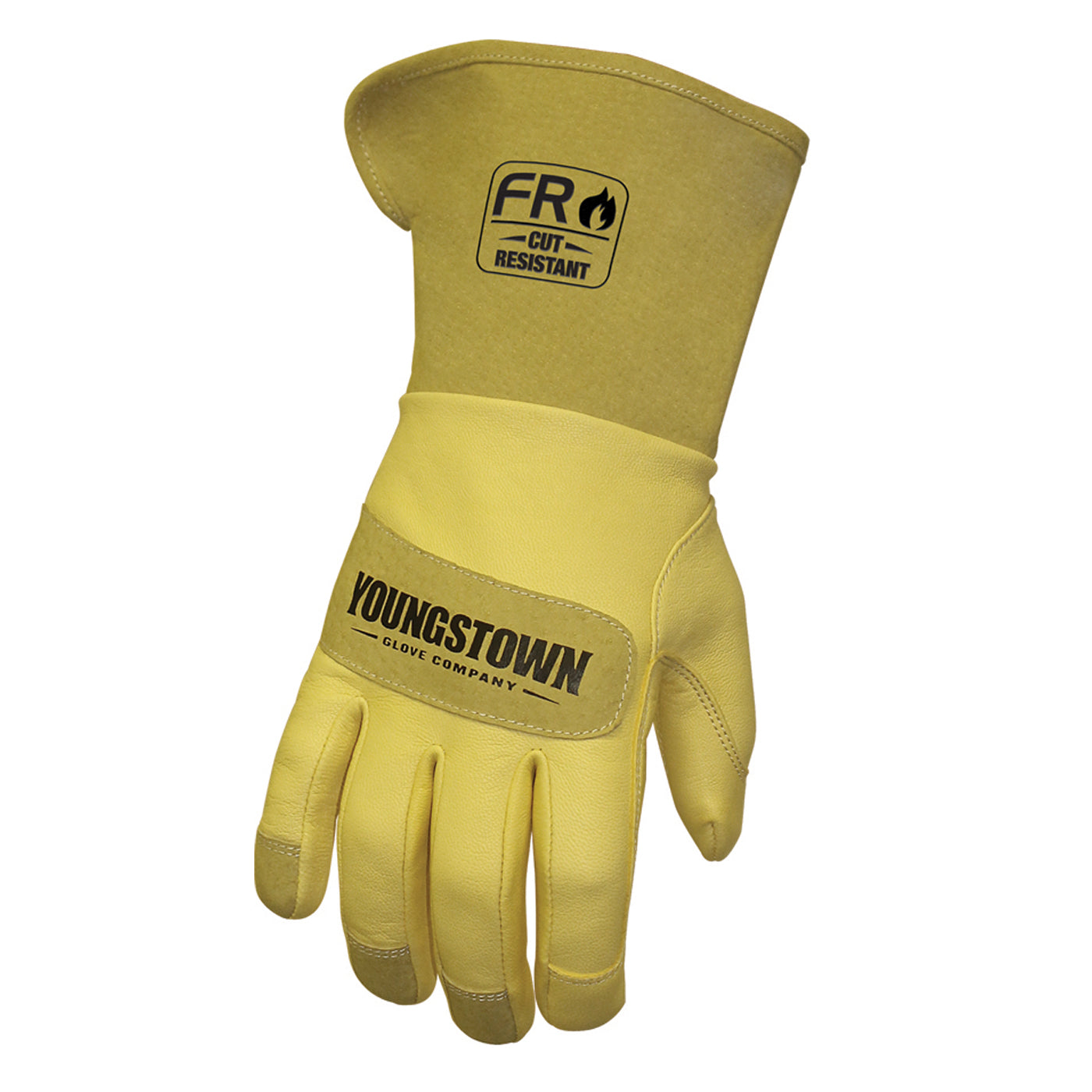
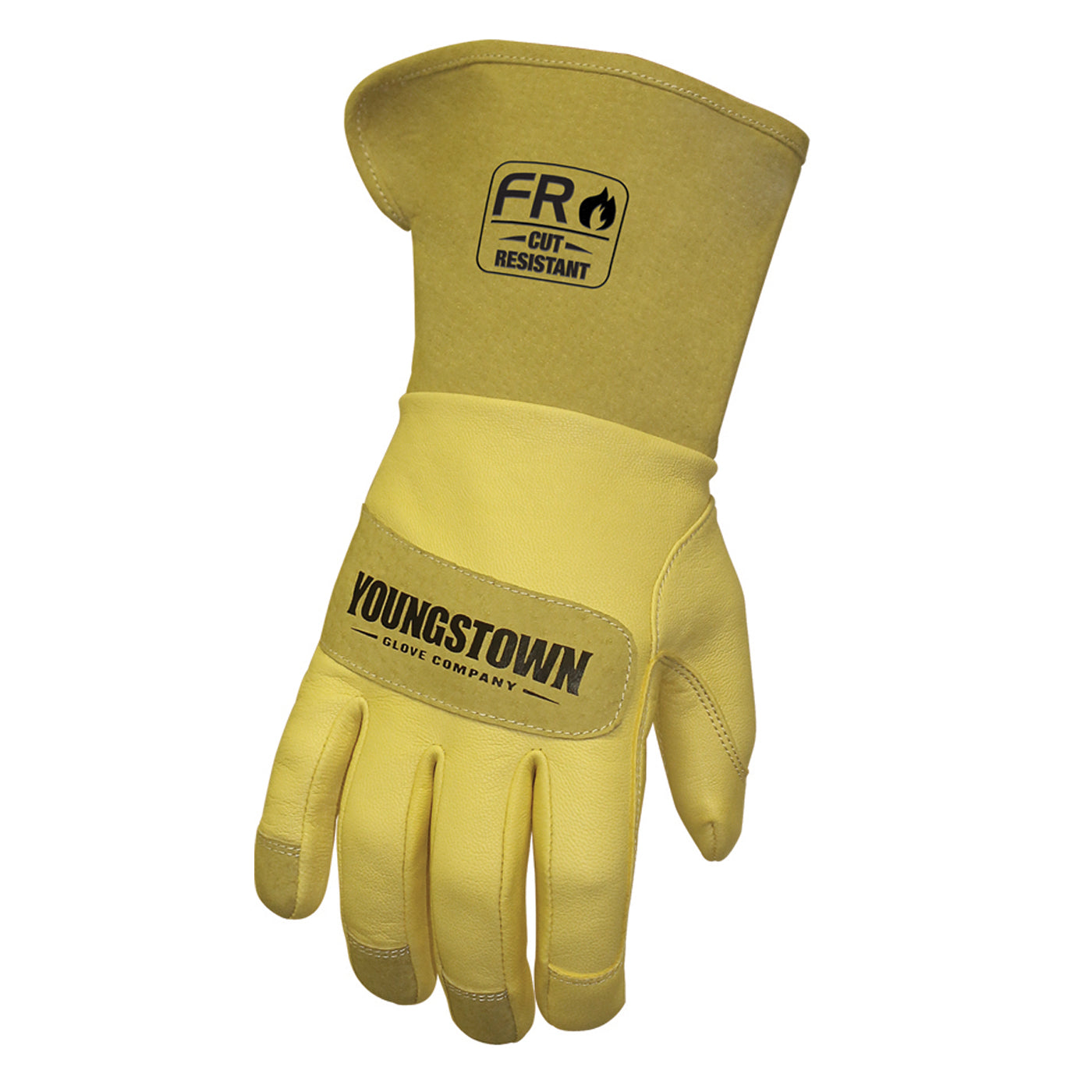
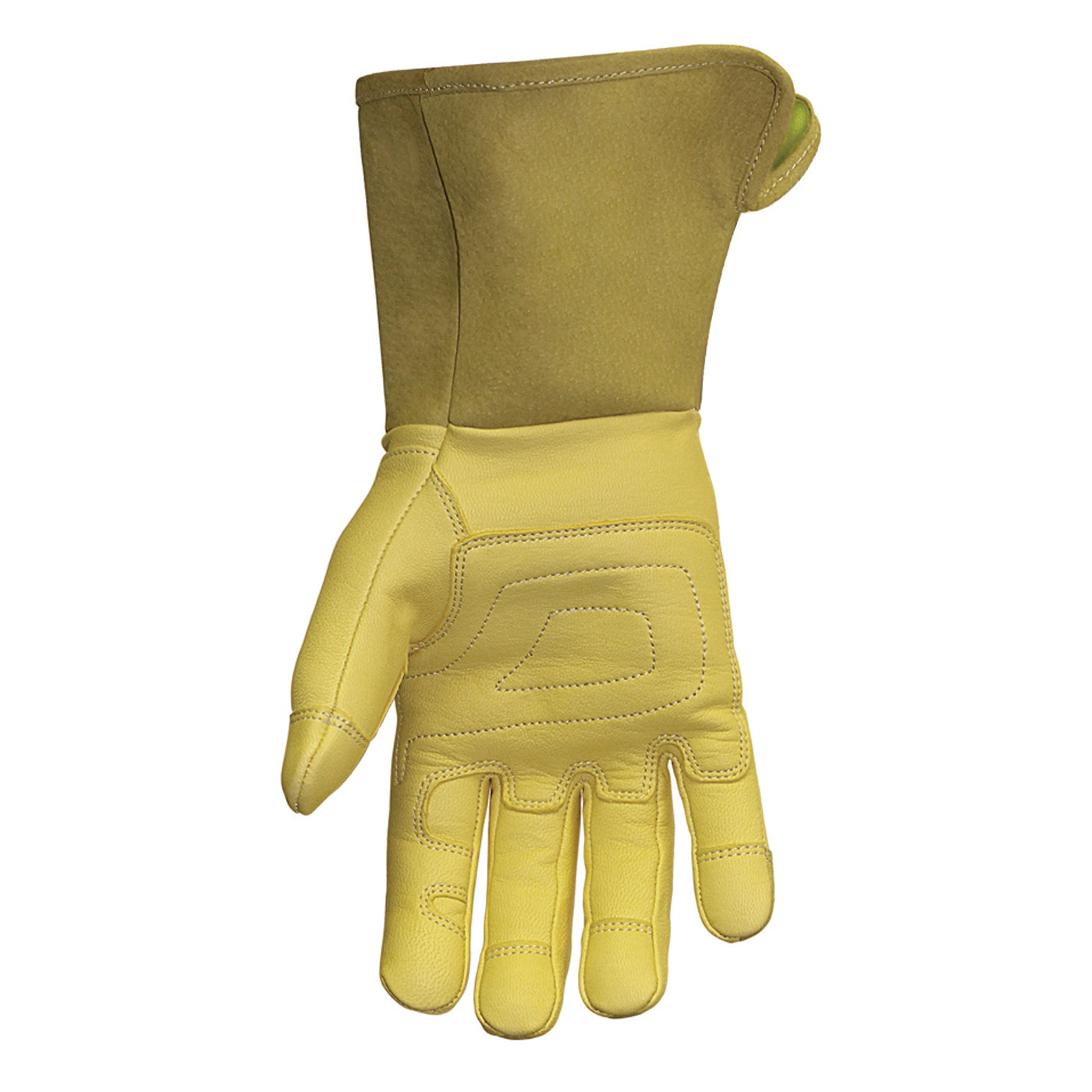


Cut Resistance Test — ASTM F2992 / ANSI/ISEA 105
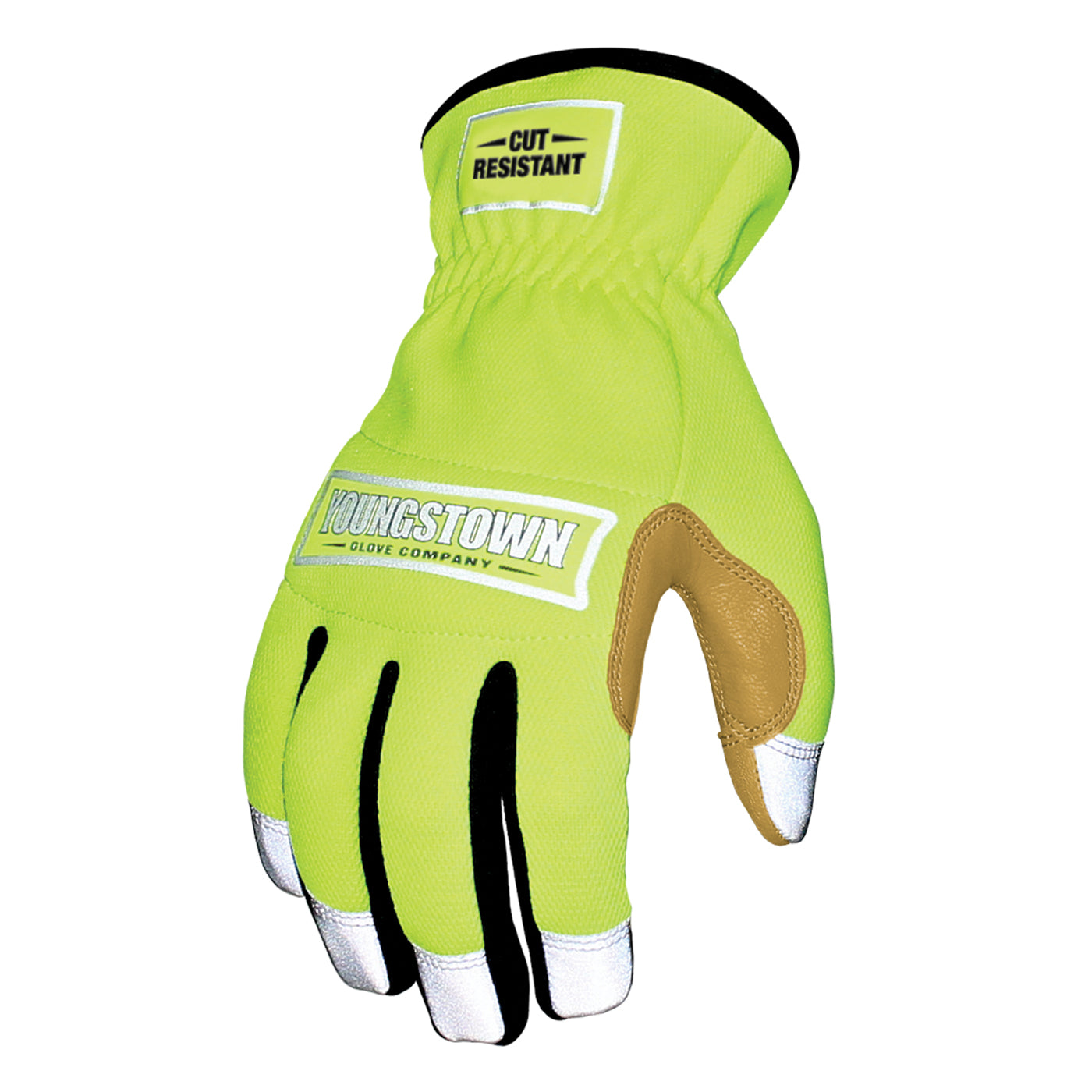
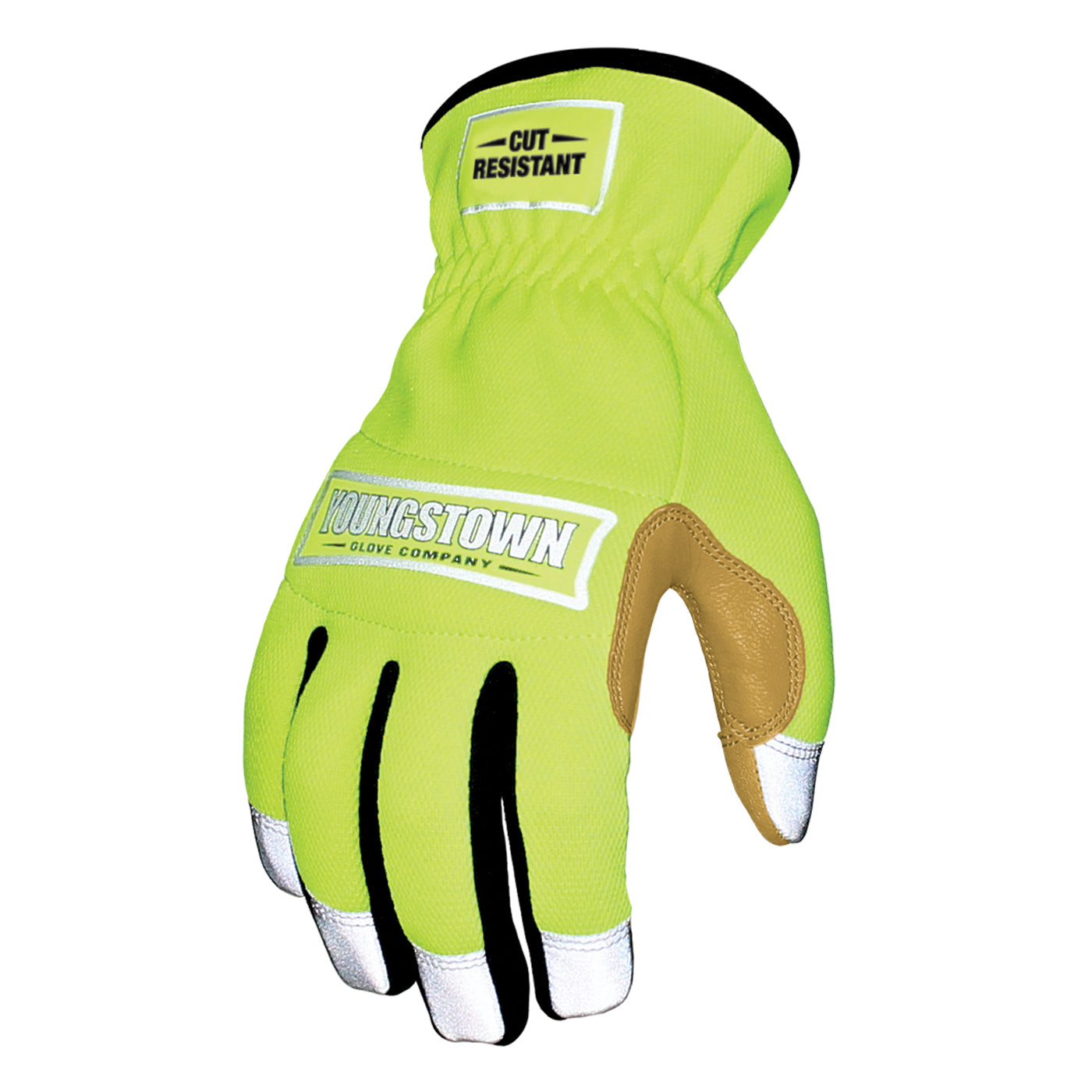
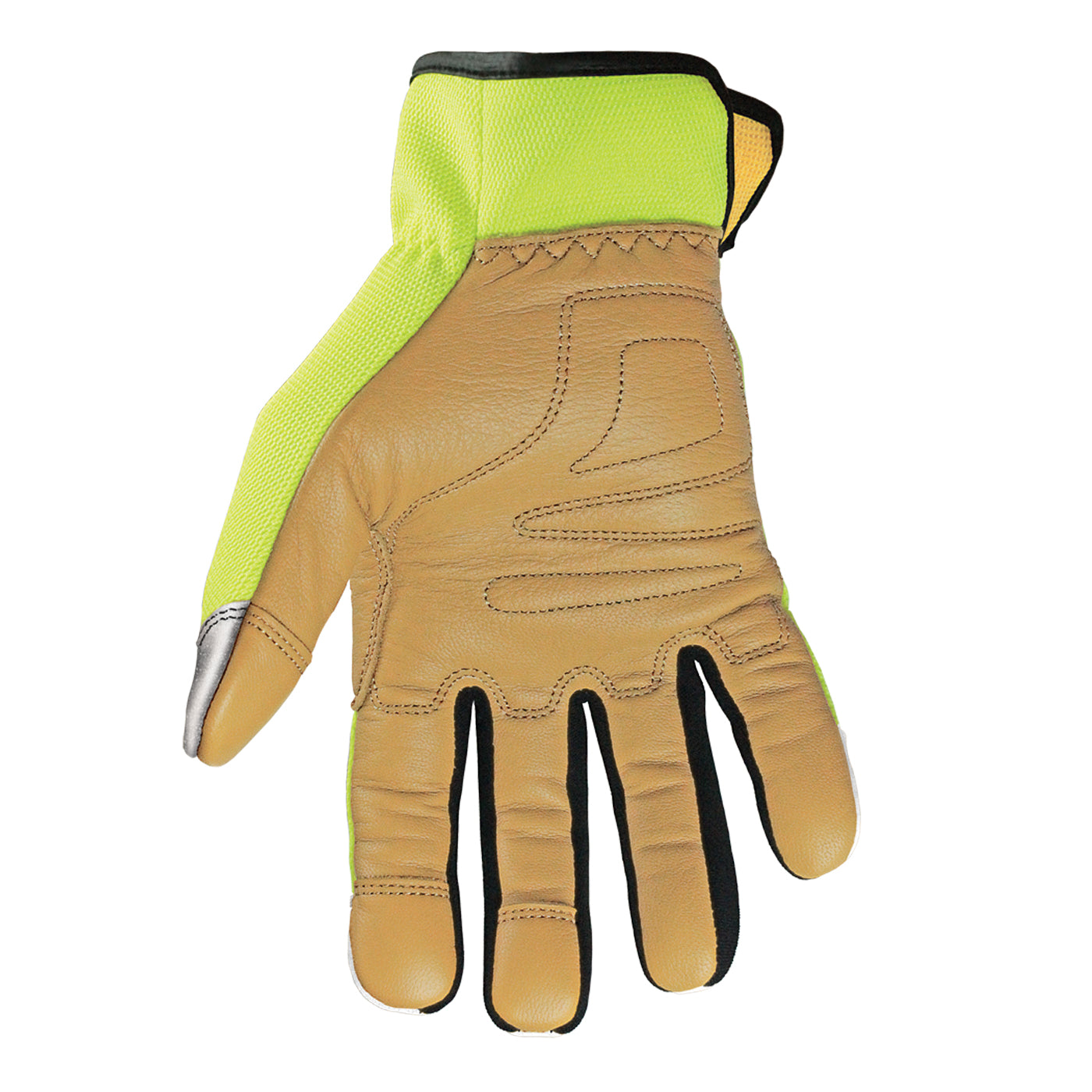
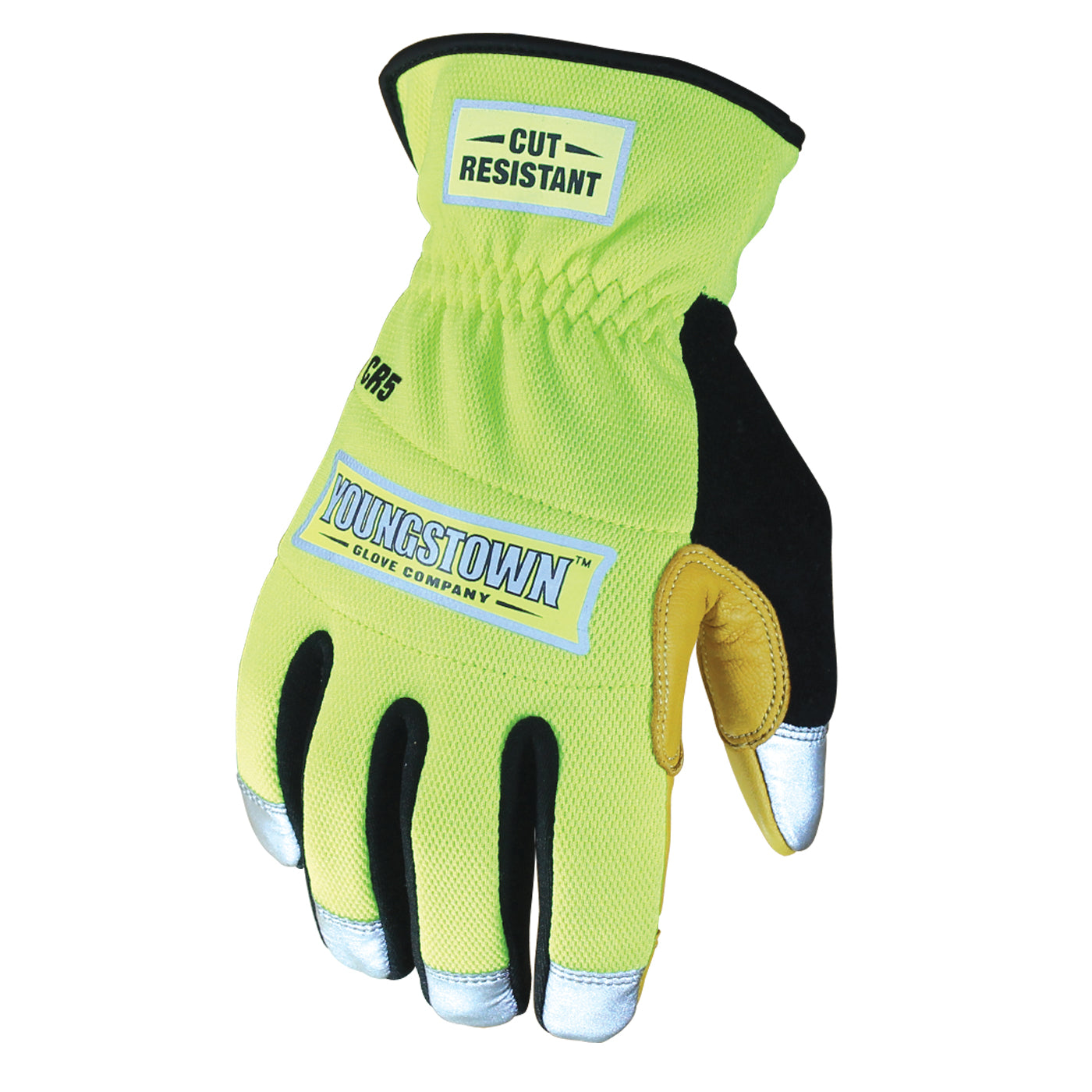
Cut resistance testing measures how much force is required to cut through a glove material — giving workers and Safety Managers a standardized, comparable measure of cut protection across products and brands.

The Test Standard
ASTM F2992 is the Standard Test Method for measuring cut resistance of materials used in protective gloves, using the TDM-100 test machine. Results are applied to the ANSI/ISEA 105 scale, which assigns a cut level from A1 (lowest) through A9 (highest) based on grams of force required to cut through the material. Both the ASTM F2992 test method and the ANSI/ISEA 105 standard were significantly revised in 2016 to standardize cut ratings across the industry and address inconsistencies in earlier test results.
How the Test Works
- A TDM-100 machine draws a blade across the material specimen under a measured load.
- The test records the weight in grams required to cut through the material.
- Results are mapped to the ANSI/ISEA 105 cut level scale (A1–A9).
- Higher cut levels indicate greater cut resistance.
Selecting the Right Cut Level
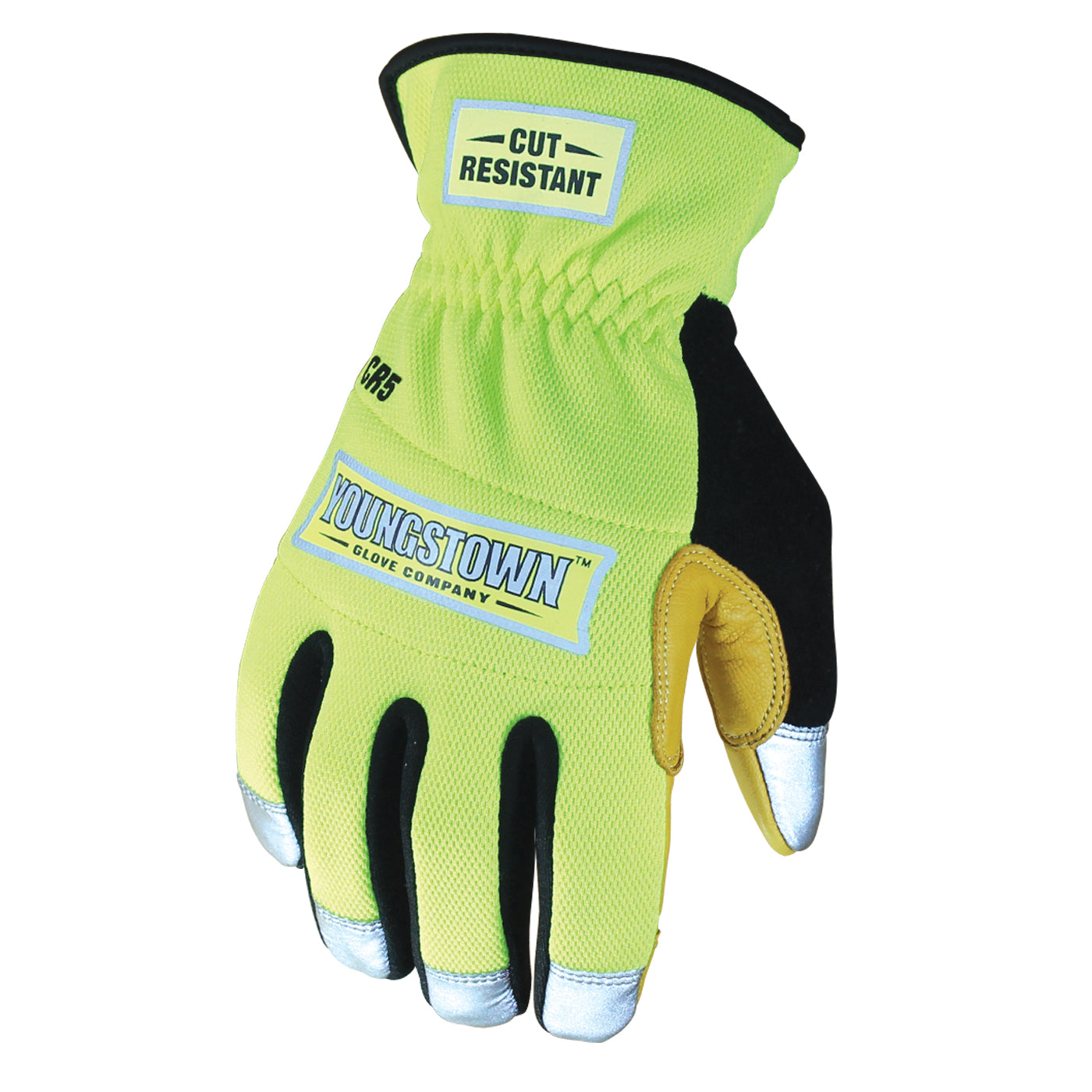
Cut level selection depends on the specific hazards of each task. Higher cut protection is not always better — dexterity and tactile sensitivity typically decrease as cut resistance increases. Youngstown’s cut-resistant line is designed to find the right balance of protection and performance for utility and industrial work tasks.


Puncture Resistance Test — EN388 / ANSI/ISEA 105
Puncture resistance testing measures how much force is required to drive a standardized probe through a glove material. This test is critical for workers who handle sharp objects, wire, fasteners, or other puncture hazards — and for any glove used in environments where penetration of the hand is a risk.

The Test Standards
The ANSI/ISEA 105 for puncture resistance is reported on a scale from 0 to 5, with higher levels indicating greater resistance to puncture force per the EN 388 Testing Method.
How the Test Works
- A standardized probe is pressed through the glove material under controlled, increasing force.
- The force (in Newtons) required to penetrate the material is recorded.
- The average puncture results of 12 glove specimens are mapped to the applicable performance level on the ANSI/ISEA 105 scale.
Why Puncture Resistance Matters in Utility Work
Utility workers — particularly those handling wire, conduit, hardware, and vegetation — face regular puncture hazards. Gloves with puncture resistance provide an increased layer of protection without sacrificing the grip and dexterity required for precision field work.
Standards referenced: ASTM F2675, ASTM D6413, ASTM F1358, ASTM F2992, ANSI/ISEA 105:2016, EN 388:2016, OSHA 29 CFR 1910.269, NFPA 70E-2024. This page requires SME review before publishing. Cross-link to Lineworker Hub resource center once hub is live.